Subscribe to Our Blog

Facebook Status

Native Offerings Farm
Facebook IconMay 21, 2013 at 8:45 pm

Katie and Todd are drilling seed. We are planting forage oats as a nurse crop for a hay field for the cattle. Later in the day we seeded a crop of forage peas that will provide a green manure for the fall brassica field and also fix nitrogen for lush fall growth. We are hoping for rain. I could hear thunder. I listen to the weather and I hear promises of rain that does not come. Dust blows in the wind and I am glad we have irrigation. Think Rain! stew

Facebook Picture

Native Offerings Farm We are on schedule to start the first week of June.

May 22, 2013 at 7:38 am

Sonia Efron Thank you. That's pretty soon!

May 22, 2013 at 8:52 am

Native Offerings Farm
Facebook IconMay 20, 2013 at 8:56 pm

Time is moving fast. There is a lot to do on the farm and every day is both exciting and a challenge. Today we finally planted the potatoes. The soil is dry and we have been busy irrigating. I feel blessed we have water here. The New York Times had an article today about water scarcity in the mid-south. It seems that farmers have pumped their aquifers dry. It will take a thousand years to refill the hole but who cares if there is money to be made today. This seems to be the dominant thought. Take the money and worry about the consequences later.
Water is our greatest natural resource in the North East. We have water. We have clean water.

Facebook Picture

Michael O'Donnell We can't grow the fuel we need, Brett. We need to simply live with less, much less. And, yes, if fracking grows up there, they won't have an abundance of clean water

May 20, 2013 at 10:19 pm

Brett Lawler At some point we'll have to rely on the fuel we need to be grown. It's one of the drawbacks of "finite" petroleum resources.

May 21, 2013 at 12:49 am

Native Offerings Farm
Facebook IconMay 5, 2013 at 2:58 pm

Next week we will stop accepting new shares. We are fully subscribed for the 2013/14 growing season. Thank you for your support. stew

Facebook Picture

Jessica Hapeman so excited for the farm shares to start!! :)

May 16, 2013 at 10:41 pm

Rebecca Hoffman When is the first pickup?

May 21, 2013 at 10:46 pm

Native Offerings Farm
Facebook IconMay 2, 2013 at 5:43 pm

Who said farming is low skill job? Supreme concentration is necessary when cultivating baby plants. One inch too far in either direction means death to the infants. You also have to watch out for the ridges that tend to bury the plants when they are disturbed. Farmer Deb is in the drivers seat. stew

Facebook Picture

Ron DuBois You look comfortable in the drivers seat Deb!

May 3, 2013 at 7:49 pm

Cheryl Lendrum Spada I love Deb and miss her so much, last time I saw her was at your wedding...please tel her I say "hi"!!!

May 4, 2013 at 11:40 pm

Native Offerings Farm
Facebook IconMay 1, 2013 at 8:12 pm

This was the first day of weeding on the farm. The weed seeds are just beginning to germinate. This is the perfect time to kill them. The entire field crew was out on a search and destroy mission. Kill it before it grows as Bob Marley sang. stew

Facebook Picture

Jill Barone Rafferty I appreciate all of the hard work that goes into creating delicious food for my family.

May 1, 2013 at 11:52 pm

Native Offerings Farm
Facebook IconApril 30, 2013 at 9:22 pm

It was the perfect day to plow under the freshly mowed rye cover crop. You know the conditions are right when you make a ball with the soil and it easily breaks apart in you hand or if you drop it. If you drop the soil ball and it remains a ball on the ground then the soil is likely too wet to plow. stew

Facebook Picture

Annie Levay-Krause Stew, One of my SOLEarians wanted to know: "What do you plan on planting? Is a no-till planting possible? If so, what factors help you decide between plow and no-till? If not, why?" She mentioned that, "I studied land management practices shortly and I'm wondering what deciding factors are for farmers." Do you mind popping over to SOLE of Buffalo to answer her questions?

May 1, 2013 at 1:39 pm

Native Offerings Farm I do not know too much about no-till. We do practice it in our greenhouses, but not in our fields. I would like to learn more. stew

May 1, 2013 at 8:15 pm

Annie Levay-Krause Would you connect with Krissy Ingleman Creech when you are able? She seems genuinely interested in speaking with you.

May 1, 2013 at 8:23 pm

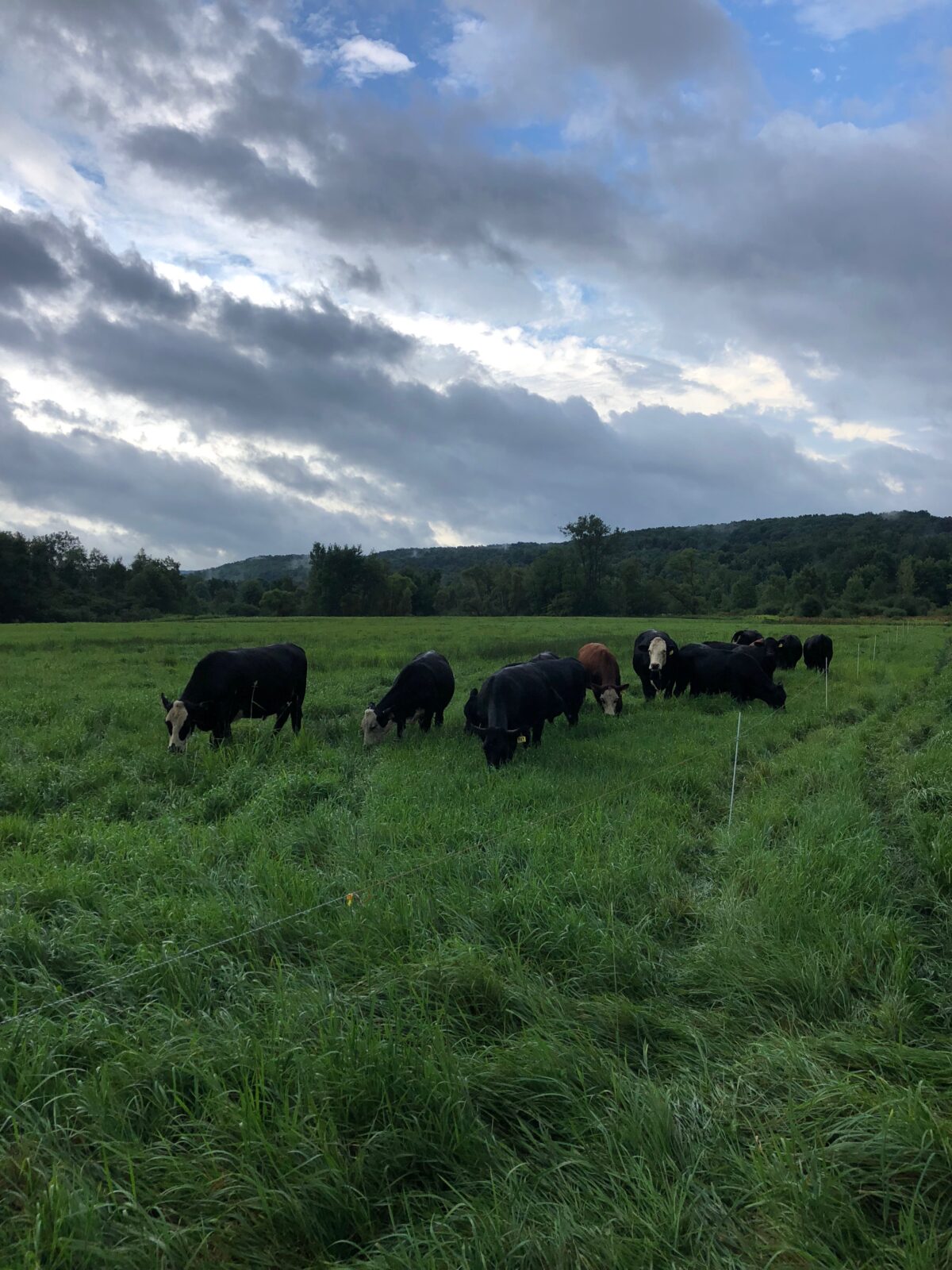
We buy our cattle from reputable dealer who knows what kind of animals we want. They are all brucellosis free and healthy when they arrive on our farm. All spring, summer and some of the fall, the cattle are pastured on a diverse mix of pasture grasses. In the winter the cattle are kept in our yard so that our fields are protected from the impact of their hooves. They are fed our own hay and sometimes, balage when the weather is really cold. We don’t feed our cattle grain, and so they don’t receive antibiotics, hormones or animal by-products in their feed. We use the manure and bedding from the yard as compost that is spread throughout the farm to balance the soil with organic matter. Because our cattle are raised completely on grass they are lean and have a delicious rich beef flavor. You can find more information about the advantages of grass fed meat from Jo Robinson’s web sitewww.eatwild.com. When cooking grass fed beef it is best to cook it slowly and at low temperatures, as the high heat will toughen the protein.

To order a quarter (or more) beef from us contact us to check on availability. We take a $20 deposit for each 1/4 you order at the time of ordering. This deposit places your order.

The beef should be ready late Fall or early Winter.

You can expect about 100lbs of meat (for a quarter order) to put into your freezer. You will need about 30-40 cubic feet of freezer space to store your ¼ order. You are charged on the hanging weight, which for a quarter is about 125-160lb. (What you can expect to take home is 25-35% less than the hanging weight due to trimming and de-boning.) You also pay the butcher for their services which adds about $0.30/lb. (some unusual cutting instruction and cyrovac involve additional costs). Our butcher, Mest Packing Co. in Strykersville, will call you when your order is ready for pick upand you will pick your order up there. It is approximately 10-15 days after butcher that your order will be ready. We will invoice you by mail based on the animals hanging weight. Our cow sizes and weights are variable, expected poundage is approximate. Quantities vary according to how you specify your butchering and how large or small the cow is. Here’s a very approximate breakdown of quantities for a quarter cow.

Click for diagram of cuts

Click for diagram of cuts

Steaks:
4 tenderloin (filet mignon) steaks
4 rib eye steaks
4 NY strips
4 sirloin steaks
4 round steaks

Roasts:
4 chuck roasts-approximately 3 lb. each
2 round roasts
1 sirloin tip
1/2 beef brisket

Other:
approximately 20 lbs. of ground beef
1 bag of bones
Short ribs
Organs available by request

Pricing & Payment Options

<p style="text-align: center;"><a title="Shares Overview &amp; Pricing" href="http://nativeofferings.com/wp/2013-shares/"><strong>For Share Pricing and Payment Options, Click Here</strong></a></p>


Recipes & Share Updates

Recent Posts